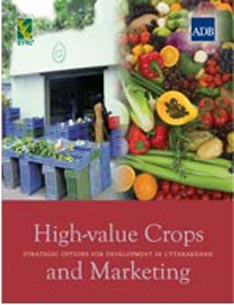
High-value Crops and Marketing
Strategic Options for Development in Uttarakhand
Asian Development Bank‚ International Food Policy Research Institute
Strategic Options for Development in Uttarakhand
About the Book
High-value crops and marketing…. studies the case of high-value agriculture in the state of Uttarakhand in the context of rapid changes in marketing at the national and international level. Uttarakhand is characterized by a significant number of opportunities in high-value agriculture. They include the presence of a high number of endemic crops, diversity in agro-climatic conditions, possibilities to produce for 'off-season' markets, organic production practices, the relative high education of producers, a strong agricultural research capacity, an active civil society, a competitive production environment and a location relatively close to terminal consumer markets, at least for part of the state. On the other hand, agriculture in Uttarakhand also faces significant challenges that limit the competitiveness of its farmers with farmers in other Indian states and outside India.
These include the high number of small scattered farms creating problems of aggregation and transport costs, migration and land conversion, increasing water and climatic change problems, environmental vulnerability, wildlife attacks, and a problematic regulatory environment. This book looks at these problems in a holistic manner and suggest ways on how Uttarakhand can prepare itself better to take advantage of the changing agricultural marketing environment.
Rapid changes are being made in the processing sector and a retail revolution is sweeping through India. Uttarakhand needs to position itself to utilize these developments. Current high-value chains in the State are not adapted towards these new opportunities. In order to study the different issues that inhibit growth in high-value agriculture this study looks at five value-chains: off-seasonal vegetables (tomato), temperate fruits (apple), vegetables (potato), organic crops and herbal plants.
The study suggests that in order to promote inclusive high-value agricultural growth, the focus has to be on improving the competitive environment, on providing information and relevant research and on upgrading infrastructure.
About the Author(s) / Editor(s)
Asian Development Bank (ADB)
International Food Policy Research Institute (IFPRI)
Contents in Detail
List of Tables, Figures and Boxes
Foreword
Abbreviations and Acronyms
1. Introduction
2. Understanding the Setting and Context
2.1. Introduction
2.2. Physical Features and Geography
2.3. Some Demographic, Social and
Economic Indicators
3. Where are Agricultural Markets Headed?
3.1. Changes in Food Demand
3.2. Modern Food Retail
3.3. Agricultural Export Markets
4. The Current State of High-value
Agriculture
4.1. Overview Agriculture
4.2. Opportunities for High-value Crop
Development
4.3. Challenges for High-value Crop Development
5. High-value Crop Marketing
5.1. Introduction
5.2. The APMC Act
5.3. Results from a Wholesale Market Survey
5.3.1. Data and Methodology
5.3.2. Descriptive Statistics
5.3.3. Problems with the Broker System
5.3.3.1. Ineffective Regulations
5.3.3.2. The Confusing Role of
Wholesalers versus Brokers
5.3.3.3. Incomplete Information Transmission
5.3.3.4. Limited Service Delivery
5.3.3.5. Lack of Competition with
the Broker System
5.3.4. Reasons for Resilience of
the Broker System
5.3.4.1. Low Transaction Costs
5.3.4.2. Access to Insurance and Credit
5.3.4.3. Access to Input Advances
5.3.5. Broker Economics
5.3.6. Conclusions and Implications
6. High-value Crop Chain Analysis
6.1. Introduction
6.2. An Overview of High-value Chains
6.2.1. Horticulture
6.2.2. Organic Crops
6.2.3. Medicinal, Aromatic and
Culinary Herbs
6.2.4. Seeds
6.2.5. Floriculture
6.3. Simulations on the Pay-offs
for Interventions
7. The Way Forward
References
Annex: Insights in High-value Commodity
Chains
Annex I—Fruits: The Case of Apples
I.1. Methodology
I.2. Production
I.2.1. The Indian Situation
I.2.2. The Situation in Uttarakhand
I.3. Marketing Channels
I.4. Wholesale, Retail and Demand
I.5. Conclusions
Annex II—Vegetables: The Case of Potatoes
II.1. Methodology
II.2. Production
II.2.1. The Indian Situation
II.2.2. The Situation in Uttarakhand
II.3. Marketing Channels
II.4. Wholesale, Retail and Demand
II.5. Conclusions
Annex III—Off-season Vegetables: The
Case of Tomatoes
III.1. Methodology
III.2. Production
III.2.1. The Indian Situation
III.2.2. The Situation in Uttarakhand
III.3. Marketing Channels
III.4. Wholesale, Retail and Demand
III.5. Conclusions
Annex IV—Organic Farming
IV.1. Introduction
IV.2. Global Trends in the Organic Food
Sector
IV.3. The Uttarakhand Context
IV.4. Case Studies
IV.4.1. Sunstar Overseas Ltd.
IV.4.2. UOCB
IV.4.3. INHERE
IV.5. Common Threads and Lessons
from the Case Studies
IV.6. Conclusions
Annex V—Medicinal, Aromatic and
Culinary Herbs
V.1. Introduction
V.2. Global and National Demand in Herbal
Industry
V.3. Institutional Channels of Production
and Marketing
V.4. The Medicinal and Aromatic Plants
Supply Chain
V.5. Sustainability of Medicinal Plants Promotion:
Cultivation versus Collection
V.6. Paving the Path for Sustainable
Herbs Cultivation
V.7. Case Studies
V.7.1. The Case of Sanjeevani
Ayurvedshala
V.7.2. Flex Foods Ltd.
V.8. Conclusions
| Publisher | AF Press |
| Publication Date | 2009 |
| Number of Pages | 132 |
| ISBN |
9788171887583 |
Academic Foundation (AF), based in New Delhi, is India’s leading independent publisher of academic/scholarly books in Social Sciences, specialising in Economics—Development Economics and Indian Economy in particular, and allied subjects.
About the Book
High-value crops and marketing…. studies the case of high-value agriculture in the state of Uttarakhand in the context of rapid changes in marketing at the national and international level. Uttarakhand is characterized by a significant number of opportunities in high-value agriculture. They include the presence of a high number of endemic crops, diversity in agro-climatic conditions, possibilities to produce for 'off-season' markets, organic production practices, the relative high education of producers, a strong agricultural research capacity, an active civil society, a competitive production environment and a location relatively close to terminal consumer markets, at least for part of the state. On the other hand, agriculture in Uttarakhand also faces significant challenges that limit the competitiveness of its farmers with farmers in other Indian states and outside India.
These include the high number of small scattered farms creating problems of aggregation and transport costs, migration and land conversion, increasing water and climatic change problems, environmental vulnerability, wildlife attacks, and a problematic regulatory environment. This book looks at these problems in a holistic manner and suggest ways on how Uttarakhand can prepare itself better to take advantage of the changing agricultural marketing environment.
Rapid changes are being made in the processing sector and a retail revolution is sweeping through India. Uttarakhand needs to position itself to utilize these developments. Current high-value chains in the State are not adapted towards these new opportunities. In order to study the different issues that inhibit growth in high-value agriculture this study looks at five value-chains: off-seasonal vegetables (tomato), temperate fruits (apple), vegetables (potato), organic crops and herbal plants.
The study suggests that in order to promote inclusive high-value agricultural growth, the focus has to be on improving the competitive environment, on providing information and relevant research and on upgrading infrastructure.
About the Author(s) / Editor(s)
Asian Development Bank (ADB)
International Food Policy Research Institute (IFPRI)
Contents in Detail
List of Tables, Figures and Boxes
Foreword
Abbreviations and Acronyms
1. Introduction
2. Understanding the Setting and Context
2.1. Introduction
2.2. Physical Features and Geography
2.3. Some Demographic, Social and
Economic Indicators
3. Where are Agricultural Markets Headed?
3.1. Changes in Food Demand
3.2. Modern Food Retail
3.3. Agricultural Export Markets
4. The Current State of High-value
Agriculture
4.1. Overview Agriculture
4.2. Opportunities for High-value Crop
Development
4.3. Challenges for High-value Crop Development
5. High-value Crop Marketing
5.1. Introduction
5.2. The APMC Act
5.3. Results from a Wholesale Market Survey
5.3.1. Data and Methodology
5.3.2. Descriptive Statistics
5.3.3. Problems with the Broker System
5.3.3.1. Ineffective Regulations
5.3.3.2. The Confusing Role of
Wholesalers versus Brokers
5.3.3.3. Incomplete Information Transmission
5.3.3.4. Limited Service Delivery
5.3.3.5. Lack of Competition with
the Broker System
5.3.4. Reasons for Resilience of
the Broker System
5.3.4.1. Low Transaction Costs
5.3.4.2. Access to Insurance and Credit
5.3.4.3. Access to Input Advances
5.3.5. Broker Economics
5.3.6. Conclusions and Implications
6. High-value Crop Chain Analysis
6.1. Introduction
6.2. An Overview of High-value Chains
6.2.1. Horticulture
6.2.2. Organic Crops
6.2.3. Medicinal, Aromatic and
Culinary Herbs
6.2.4. Seeds
6.2.5. Floriculture
6.3. Simulations on the Pay-offs
for Interventions
7. The Way Forward
References
Annex: Insights in High-value Commodity
Chains
Annex I—Fruits: The Case of Apples
I.1. Methodology
I.2. Production
I.2.1. The Indian Situation
I.2.2. The Situation in Uttarakhand
I.3. Marketing Channels
I.4. Wholesale, Retail and Demand
I.5. Conclusions
Annex II—Vegetables: The Case of Potatoes
II.1. Methodology
II.2. Production
II.2.1. The Indian Situation
II.2.2. The Situation in Uttarakhand
II.3. Marketing Channels
II.4. Wholesale, Retail and Demand
II.5. Conclusions
Annex III—Off-season Vegetables: The
Case of Tomatoes
III.1. Methodology
III.2. Production
III.2.1. The Indian Situation
III.2.2. The Situation in Uttarakhand
III.3. Marketing Channels
III.4. Wholesale, Retail and Demand
III.5. Conclusions
Annex IV—Organic Farming
IV.1. Introduction
IV.2. Global Trends in the Organic Food
Sector
IV.3. The Uttarakhand Context
IV.4. Case Studies
IV.4.1. Sunstar Overseas Ltd.
IV.4.2. UOCB
IV.4.3. INHERE
IV.5. Common Threads and Lessons
from the Case Studies
IV.6. Conclusions
Annex V—Medicinal, Aromatic and
Culinary Herbs
V.1. Introduction
V.2. Global and National Demand in Herbal
Industry
V.3. Institutional Channels of Production
and Marketing
V.4. The Medicinal and Aromatic Plants
Supply Chain
V.5. Sustainability of Medicinal Plants Promotion:
Cultivation versus Collection
V.6. Paving the Path for Sustainable
Herbs Cultivation
V.7. Case Studies
V.7.1. The Case of Sanjeevani
Ayurvedshala
V.7.2. Flex Foods Ltd.
V.8. Conclusions
| Publisher | AF Press |
| Publication Date | 2009 |
| Number of Pages | 132 |
| ISBN |
9788171887583 |
Couldn't load pickup availability
Share
-
Curated Collections By AF Press
-
Premium Print Quality
-
Author-Centric Publishing
-
Trusted by Readers Nationwide
High-value Crops and Marketing