

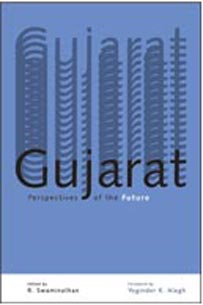
Gujarat: Perspectives of the Future
R. Swaminathan (Ed.)
About the Book
A path-breaking book which examines India’s highly controversial yet most successful state: Gujarat.
It is difficult to argue with Gujarat’s success— a consistently growing state income, massive contribution to India’s coffers, and high marks in industry, agriculture, and higher education.
How did Gujarat come to be India’s second most industrialised state, a toast among experts on economic development? And what lies ahead? In 11 well-researched, well-thought-out essays, some of the country’s leading experts on Gujarat give you the answers.
Convincingly woven by editor, R. Swaminathan, Gujarat: Perspectives of the Future takes more than a cursory look at the industrial development that has swiftly taken place in the state. The volume goes deep into the phenomenon, providing analyses for various issues such as the macroeconomic framework for Gujarat’s industrialisation and the dynamics of its corollary urban development. More importantly, the book examines the way forward: what challenges await Gujarat?
This book makes a compelling argument for a blueprint that will address the state’s serious problems including environmental degradation, discrimination against women, poor health care and nutrition, and lack of quality basic education. A blueprint which will then, make Gujarat’s remarkable development truly sustainable.
About the Author(s) / Editor(s)
R. Swaminathan is a Senior Fellow with the Observer Research Foundation. A Ph.D. from the Jawaharlal Nehru University, he has over 11 years of experience in journalism, academics and research. He has worked with several leading newspapers and websites, including The Indian Express and www.rediff.com. He is a winner of the South Asian Journalists Association (SAJA) award and a recipient of the University Grants Commission (UGC) fellowship. He has four books to his credit—Small Hands, Big Feet: New Forms of Labour Mobilisation; Mumbai Vision 2015: Agenda for Urban Renewal; Healthcare Issues in Large Federal Countries and Free Power to Farmers: Policy Implications for Maharashtra.
Contributors
Raksha Alagh is an educationist and economist with special interest in health care issues. She has contributed her research expertise to multilateral institutions like the International Labour Organisation (ILO).
Dinesh N. Awasthi is Director of the Entrepreneurship Development Institute of India (EDII). He is an economist with extensive experience in entrepreneurship training, teaching and research.
Somnath Bandhopadhyay is a visiting faculty member at the Centre for Environmental Planning and Technology.
Ravindra H. Dholakia is an economist at the Indian Institute of Management, Ahmedabad, and has been a consultant to multilateral institutions like the
Asian Development Bank (ADB) and the World Bank.
Indira Hirway is Director and Professor of Economics at the Centre for Development Alternatives.
Sudarshan Iyengar is Professor and Director, Gujarat Institute of Development Research, Ahmedabad.
S.P. Kashyap is former Director of Sardar Patel Institute of Social and Economic Research, Ahmedabad. He is currently visiting faculty at the Centre for Development Alternatives.
Darshini Mahadevia is Assistant Professor, Centre for Environmental Planning and Technology. She is a development studies researcher, specialising in policy research.
Sebastian Morris is an economist at the Indian Institute of Management, Ahmedabad, specialising in energy and infrastructure management.
K. Mukundan is an urban management specialist associated with the World Bank.
Sunil R. Parekh is the Senior Director, Confederation of Indian Industries (CII), and is also their officer-in-charge of the CII Rehabilitation Initiative.
B.B. Patel is a well-known labour economist, and has authored several books and contributed extensively to peer-reviewed international academic journals.
Mahesh Pathak is an agricultural economist and Honorary Director, Agro-Economic Research Centre, Ahmedabad.
H.M. Shivanand Swamy is Director, Centre for Environmental Planning and Technology. His areas of specialisation are transportation and environmental and infrastructure planning.
H.S. Singh is an Indian Forest Service (IFS) officer and is the Conservator of Forests, Vadodara Circle.
P.K. Singh is Professor and Head, Department of Economics, Sardar Patel University, Vallabh Vidyanagar.
Rashu Vakil is a renowned educationist and Director, School of Architecture, Ahmedabad.
Contents in Detail
| Publisher | AF Press |
| Publication Date | 2008 |
| Number of Pages | 358 |
| ISBN |
9788171885954 |
Academic Foundation (AF), based in New Delhi, is India’s leading independent publisher of academic/scholarly books in Social Sciences, specialising in Economics—Development Economics and Indian Economy in particular, and allied subjects.
About the Book
A path-breaking book which examines India’s highly controversial yet most successful state: Gujarat.
It is difficult to argue with Gujarat’s success— a consistently growing state income, massive contribution to India’s coffers, and high marks in industry, agriculture, and higher education.
How did Gujarat come to be India’s second most industrialised state, a toast among experts on economic development? And what lies ahead? In 11 well-researched, well-thought-out essays, some of the country’s leading experts on Gujarat give you the answers.
Convincingly woven by editor, R. Swaminathan, Gujarat: Perspectives of the Future takes more than a cursory look at the industrial development that has swiftly taken place in the state. The volume goes deep into the phenomenon, providing analyses for various issues such as the macroeconomic framework for Gujarat’s industrialisation and the dynamics of its corollary urban development. More importantly, the book examines the way forward: what challenges await Gujarat?
This book makes a compelling argument for a blueprint that will address the state’s serious problems including environmental degradation, discrimination against women, poor health care and nutrition, and lack of quality basic education. A blueprint which will then, make Gujarat’s remarkable development truly sustainable.
About the Author(s) / Editor(s)
R. Swaminathan is a Senior Fellow with the Observer Research Foundation. A Ph.D. from the Jawaharlal Nehru University, he has over 11 years of experience in journalism, academics and research. He has worked with several leading newspapers and websites, including The Indian Express and www.rediff.com. He is a winner of the South Asian Journalists Association (SAJA) award and a recipient of the University Grants Commission (UGC) fellowship. He has four books to his credit—Small Hands, Big Feet: New Forms of Labour Mobilisation; Mumbai Vision 2015: Agenda for Urban Renewal; Healthcare Issues in Large Federal Countries and Free Power to Farmers: Policy Implications for Maharashtra.
Contributors
Raksha Alagh is an educationist and economist with special interest in health care issues. She has contributed her research expertise to multilateral institutions like the International Labour Organisation (ILO).
Dinesh N. Awasthi is Director of the Entrepreneurship Development Institute of India (EDII). He is an economist with extensive experience in entrepreneurship training, teaching and research.
Somnath Bandhopadhyay is a visiting faculty member at the Centre for Environmental Planning and Technology.
Ravindra H. Dholakia is an economist at the Indian Institute of Management, Ahmedabad, and has been a consultant to multilateral institutions like the
Asian Development Bank (ADB) and the World Bank.
Indira Hirway is Director and Professor of Economics at the Centre for Development Alternatives.
Sudarshan Iyengar is Professor and Director, Gujarat Institute of Development Research, Ahmedabad.
S.P. Kashyap is former Director of Sardar Patel Institute of Social and Economic Research, Ahmedabad. He is currently visiting faculty at the Centre for Development Alternatives.
Darshini Mahadevia is Assistant Professor, Centre for Environmental Planning and Technology. She is a development studies researcher, specialising in policy research.
Sebastian Morris is an economist at the Indian Institute of Management, Ahmedabad, specialising in energy and infrastructure management.
K. Mukundan is an urban management specialist associated with the World Bank.
Sunil R. Parekh is the Senior Director, Confederation of Indian Industries (CII), and is also their officer-in-charge of the CII Rehabilitation Initiative.
B.B. Patel is a well-known labour economist, and has authored several books and contributed extensively to peer-reviewed international academic journals.
Mahesh Pathak is an agricultural economist and Honorary Director, Agro-Economic Research Centre, Ahmedabad.
H.M. Shivanand Swamy is Director, Centre for Environmental Planning and Technology. His areas of specialisation are transportation and environmental and infrastructure planning.
H.S. Singh is an Indian Forest Service (IFS) officer and is the Conservator of Forests, Vadodara Circle.
P.K. Singh is Professor and Head, Department of Economics, Sardar Patel University, Vallabh Vidyanagar.
Rashu Vakil is a renowned educationist and Director, School of Architecture, Ahmedabad.
Contents in Detail
| Publisher | AF Press |
| Publication Date | 2008 |
| Number of Pages | 358 |
| ISBN |
9788171885954 |

Couldn't load pickup availability
Share
-

Curated Collections By AF Press
-

Premium Print Quality
-

Author-Centric Publishing
-

Trusted by Readers Nationwide


Gujarat: Perspectives of the Future