

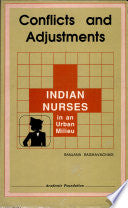
Conflicts and Adjustments
Ranjana Raghavachari
About the Book
Studies in Social Anthropology in India have, by and Large, concerned themselves with original traditional groups with identifiable cultural norms in non-urban settings. But with more and more urban development on the one hand and an awareness of the need to understand and improve the status of women on the other, nurses emerge as an important identifiable group in an urban setting. NURSES, thus, provide an ideal study group where it is Possible to discern rural-urban traits within a constant mix of traditional and modern values. Moreover, in any effort to improve the status of women, one cannot fail to identify nurses as an important social group requiring attention.
This study investigates the many conflicts that nurses face in their transformation from traditional upbringing to a modern occupation in an urban milieu and, in particular, examines the conflicts that emerge from the low status accorded to their profession.
Based on a Purposive sample of nurses in a metropolitan hospital (New Delhi), the study points out that the low status accorded to the nursing profession in India cannot be simply explained in terms of the western concepts of antecedents, investment of the network of resources, the complex phenomena of role structures or the functional variables; rather, it is a sex based inequality derived from the deep rooted Hindu Philosophy practising traditional hierarchy. Females are assigned the role of service to the men of their family.
The author observes that, among other factors, the low prestige of the profession is explainable in terms of the traditional Guna theory which forms an integral part of the Sankhya System of Hindu Philosphy. Menial service has been assigned the lowest evaluation under this system and hence had been classified under Tamasic Guna. Under the traditional hierarchy also women are assigned the service role. The nursing profession, being female dominated and dealing with bodily impurities, is accorded a low status.
The study comes out with specific suggestions for improving the status and professional life of nurses who form an indispensable group in the modern society.
The NURSING PROFESSION serves an important social need. The efficiency of the service rendered by the profession depends to a large extent on the care given to the personnel. There is every need for improvement. A policy directed towards the betterment of any profession or group which feels deprived of its due legitimate social and economic status requires constant rethinking, imagination and the will and willingness to push through conscious priorities.
About the Author(s) / Editor(s)
Ranjana Raghavachari: Ms. Ranjana Raghavachari received her M.A. degree in Sociology in 1985 and M.Phil in Social Anthropology in 1988 from University of Delhi. She was the recipient of National Scholarship under the Centre for Advanced Study Scheme for Sociology. In 1986 she was awarded the National Junior Research Fellowship of the University Grants Commission for pursuing research in Social Anthropology.
Widely travelled, she has had occasion to observe the differing social conditions in Europe, especially in U.K. and France, and also in the Asian Nations like India, Bangladesh, Burma, Thailand and Singapore. These wide observations fuelled her interest in the underprivileged social groups.
She joined the Indian Civil Services and is currently working as Assistant Collector in the Indian Customs and Central Excise Service.
Contents in Detail
1. Introduction and Perspective
Introduction
Historical Perspective
Pre-Nightingale Phase
i. Ancient Period
ii. Early Christian Period
iii. The Middle Ages
iv. Renaissance and After
Nightingale Phase (The Era of Modern Nursing)
History of Nursing in India - A Brief Account
General Information about Nursing in India
Review of Existing Literature : Salient Features of Selected Studies
Problem Identification and Objective of Study
Appendix to Chapter 1 - The Hospital and the Nurse
i. Hospital Organization
ii. Division of Labour in Hospital
iii. Social Structure of the Hospital
a. Doctors and Nurses
b. The Patient and the Nurse
2. Methodology and Sample Design
Field of Study and its Relevance
Organization of the Hospital Studied
The Pilot Survey
The Sample
Sample Design and Methodology of Fieldwork
The Schedule
Difficulties and Experiences
3. Social Background
Introduction
General Particulars
i. Age and years of Experience
ii. Marital Status
iii. Religion
iv. Mother Tongue
v. Home State
vi. Place of Origin (Urban-Rural Background)
vii. Educational Background
viii. Occupational Background
ix. Income
x. Family Size
4. Nurse at Home and Leisure
Introduction
Household Structure
i. Current Household Type
ii. Preference for Household Type and Reasons
iii. Reasons for preferring Joint Households
iv. Reasons for preferring Nuclear Households
v. The Official Quarters
Division of Labour in the Family
The Nurse and Her Salary
i. Saving
ii. Support of the Family
iii. Spending on Self
Oritation Towards Religion
i. Description of Self
ii. Visits to Places of Worship
iii. Role of Religion in Everyday Life
iv. Regularity of Scripture reading
Leisure and Interactions
i. Adequacy of Off Duty Hours
ii. Activities during Off Duty Hours
iii. Interaction with Family, Relatives and Others
Reading Habits
5. The Nurse at Work
Introduction
Working Conditions in the Hospital
i. A Working Day in the Hospital
ii. Salary Scales and Leave Entitlements
iii. Interrelationship with other Hospital Personnel
a. Relations with Fellow Nurses
b. Relations with Class-IV
c. Nurse-Doctor Relations
d. Relationship with Patients and Relatives
Attitudes towards Work and Profession
i. Why Nursing was Chosen
ii. Other Aspirations and why they were rejected
iii. Continuance of the Nursing Profession in the Family : Their Views
iv. Job Mobility
6. Status of Nurses in India
Status : A Discussion
The Indian Ethos : An Explanation of the Low Status of Nurses
The Status of Women and Nursing
The Relative Status of Doctors and Nurses
Suggestions Put Forward by the Nurses
7. Conclusions
Family and Personal Background
Nurse at Home and Leisure Time Activities
Working Conditions
Status and Attitudes
A Theoretical Explanation of the Low Status of Emerging Suggestions
Bibliography
Appendix-1
Questionnaire Canvassed in Pilot Survey
Appendix-2
Schedule Canvassed in Main Survey
Index
| Publisher | AF Press |
| Publication Date | 1990 |
| Number of Pages | 292 |
| ISBN |
8171880002 |
Academic Foundation (AF), based in New Delhi, is India’s leading independent publisher of academic/scholarly books in Social Sciences, specialising in Economics—Development Economics and Indian Economy in particular, and allied subjects.
About the Book
Studies in Social Anthropology in India have, by and Large, concerned themselves with original traditional groups with identifiable cultural norms in non-urban settings. But with more and more urban development on the one hand and an awareness of the need to understand and improve the status of women on the other, nurses emerge as an important identifiable group in an urban setting. NURSES, thus, provide an ideal study group where it is Possible to discern rural-urban traits within a constant mix of traditional and modern values. Moreover, in any effort to improve the status of women, one cannot fail to identify nurses as an important social group requiring attention.
This study investigates the many conflicts that nurses face in their transformation from traditional upbringing to a modern occupation in an urban milieu and, in particular, examines the conflicts that emerge from the low status accorded to their profession.
Based on a Purposive sample of nurses in a metropolitan hospital (New Delhi), the study points out that the low status accorded to the nursing profession in India cannot be simply explained in terms of the western concepts of antecedents, investment of the network of resources, the complex phenomena of role structures or the functional variables; rather, it is a sex based inequality derived from the deep rooted Hindu Philosophy practising traditional hierarchy. Females are assigned the role of service to the men of their family.
The author observes that, among other factors, the low prestige of the profession is explainable in terms of the traditional Guna theory which forms an integral part of the Sankhya System of Hindu Philosphy. Menial service has been assigned the lowest evaluation under this system and hence had been classified under Tamasic Guna. Under the traditional hierarchy also women are assigned the service role. The nursing profession, being female dominated and dealing with bodily impurities, is accorded a low status.
The study comes out with specific suggestions for improving the status and professional life of nurses who form an indispensable group in the modern society.
The NURSING PROFESSION serves an important social need. The efficiency of the service rendered by the profession depends to a large extent on the care given to the personnel. There is every need for improvement. A policy directed towards the betterment of any profession or group which feels deprived of its due legitimate social and economic status requires constant rethinking, imagination and the will and willingness to push through conscious priorities.
About the Author(s) / Editor(s)
Ranjana Raghavachari: Ms. Ranjana Raghavachari received her M.A. degree in Sociology in 1985 and M.Phil in Social Anthropology in 1988 from University of Delhi. She was the recipient of National Scholarship under the Centre for Advanced Study Scheme for Sociology. In 1986 she was awarded the National Junior Research Fellowship of the University Grants Commission for pursuing research in Social Anthropology.
Widely travelled, she has had occasion to observe the differing social conditions in Europe, especially in U.K. and France, and also in the Asian Nations like India, Bangladesh, Burma, Thailand and Singapore. These wide observations fuelled her interest in the underprivileged social groups.
She joined the Indian Civil Services and is currently working as Assistant Collector in the Indian Customs and Central Excise Service.
Contents in Detail
1. Introduction and Perspective
Introduction
Historical Perspective
Pre-Nightingale Phase
i. Ancient Period
ii. Early Christian Period
iii. The Middle Ages
iv. Renaissance and After
Nightingale Phase (The Era of Modern Nursing)
History of Nursing in India - A Brief Account
General Information about Nursing in India
Review of Existing Literature : Salient Features of Selected Studies
Problem Identification and Objective of Study
Appendix to Chapter 1 - The Hospital and the Nurse
i. Hospital Organization
ii. Division of Labour in Hospital
iii. Social Structure of the Hospital
a. Doctors and Nurses
b. The Patient and the Nurse
2. Methodology and Sample Design
Field of Study and its Relevance
Organization of the Hospital Studied
The Pilot Survey
The Sample
Sample Design and Methodology of Fieldwork
The Schedule
Difficulties and Experiences
3. Social Background
Introduction
General Particulars
i. Age and years of Experience
ii. Marital Status
iii. Religion
iv. Mother Tongue
v. Home State
vi. Place of Origin (Urban-Rural Background)
vii. Educational Background
viii. Occupational Background
ix. Income
x. Family Size
4. Nurse at Home and Leisure
Introduction
Household Structure
i. Current Household Type
ii. Preference for Household Type and Reasons
iii. Reasons for preferring Joint Households
iv. Reasons for preferring Nuclear Households
v. The Official Quarters
Division of Labour in the Family
The Nurse and Her Salary
i. Saving
ii. Support of the Family
iii. Spending on Self
Oritation Towards Religion
i. Description of Self
ii. Visits to Places of Worship
iii. Role of Religion in Everyday Life
iv. Regularity of Scripture reading
Leisure and Interactions
i. Adequacy of Off Duty Hours
ii. Activities during Off Duty Hours
iii. Interaction with Family, Relatives and Others
Reading Habits
5. The Nurse at Work
Introduction
Working Conditions in the Hospital
i. A Working Day in the Hospital
ii. Salary Scales and Leave Entitlements
iii. Interrelationship with other Hospital Personnel
a. Relations with Fellow Nurses
b. Relations with Class-IV
c. Nurse-Doctor Relations
d. Relationship with Patients and Relatives
Attitudes towards Work and Profession
i. Why Nursing was Chosen
ii. Other Aspirations and why they were rejected
iii. Continuance of the Nursing Profession in the Family : Their Views
iv. Job Mobility
6. Status of Nurses in India
Status : A Discussion
The Indian Ethos : An Explanation of the Low Status of Nurses
The Status of Women and Nursing
The Relative Status of Doctors and Nurses
Suggestions Put Forward by the Nurses
7. Conclusions
Family and Personal Background
Nurse at Home and Leisure Time Activities
Working Conditions
Status and Attitudes
A Theoretical Explanation of the Low Status of Emerging Suggestions
Bibliography
Appendix-1
Questionnaire Canvassed in Pilot Survey
Appendix-2
Schedule Canvassed in Main Survey
Index
| Publisher | AF Press |
| Publication Date | 1990 |
| Number of Pages | 292 |
| ISBN |
8171880002 |

Couldn't load pickup availability
Share
-

Curated Collections By AF Press
-

Premium Print Quality
-

Author-Centric Publishing
-

Trusted by Readers Nationwide


Conflicts and Adjustments