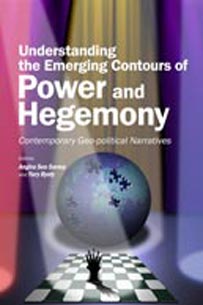
Understanding the Emerging Contours of Power and Hegemony
Contemporary Geo-political Narratives
Angira Sen Sarma (Ed.)‚ Yury Byaly (Ed.)
Contemporary Geo-political Narratives
About the Book
India-Russia relations have withstood the test of time and both countries have remained important partners. Their bilateral ties had to be adjusted with the changing international milieu post Soviet disintegration. Today, the strategic partnership between the two countries covers a wide range of areas, including economic cooperation, science and technology, energy, space and defence, indicating the continuing strong ties between the two countries. The chapters in this volume discuss various issues of common concern like terrorism, radical Islam, non-proliferation, migration, climate change, drug trafficking and the international financial crisis. They also highlight the converging and diverging views of the two countries on global challenges like tensions in the Middle East and Afghanistan.
About the Author(s) / Editor(s)
Angira Sen Sarma is an Assistant Professor at the Afghanistan Studies Centre, Academy of International Studies, Jamia Millia Islamia, New Delhi. Her primary areas of research are Central Asia and Afghanistan.
Yury Byaly is the Vice-President of the International Public Foundation-Experimental Creative Centre (IPF-ECC), Moscow. His area of research includes problems of geoeconomy, global policy and energy.
Contributors
Yury Bardakhchiev
Yury Byaly +
Kaustav Dhar Chakrabarti
Mikhail Dmitriev
Wilson John
Sunjoy Joshi
Ajish P. Joy
Eduard Kryukov
Sergey Kurginyan
Vladimir Novikov
Maria Podkopaeva
Rahul Prakash
Rajeswari Pillai Rajagopalan
M. Rasgotra
Angira Sen Sarma +
Vivan Sharan
Vera Sorokina
Marina Volchkova
+ Co-editor
Contents in Detail
About the Editors/Contributors
Editor’s Note
Part I
Security Dynamics: Indian and Russian Perspectives
1. Non-Proliferation or Proliferation?
What are the Global Nuclear Trends of the 21st Century?
Yury Bardakhchiev
2. Non-Proliferation Challenges in Asia:
An Indian Perspective
Rajeswari Pillai Rajagopalan
3. Mapping Terrorism Post 9/11:
Key Trends and Challenges
Wilson John
4. The Radical Islamic Militant Groups of Central Asia
as Intermediaries between the Central Asian and
Afghanistan-Pakistan Regions: The Islamic
Movement of Uzbekistan and the Islamic Jihad Union
Maria Podkopaeva
5. Radical Islam and Neo-Nazism:
Temporary Alliance or Strategic Partnership?
Eduard Kryukov
6. The Drug Trade as a Factor in Global Destabilisation
Mikhail Dmitriev
7. Narcotics Trafficking in Afghanistan:
Prospects and Challenges for India and Russia
Rahul Prakash
Part II
Global Issues: Views from India and Russia
8. Economic Globalisation and the Crisis
Yury Byaly
9. Globalisation of Trade and Economy: Financial Crisis
and its Implications on Energy Markets
Sunjoy Joshi
10. Geo-Climatic Concepts as Instruments
in Global Governance, Business and Ideology
Vera Sorokina
11. The Migration Process in Russia:
Integration or Enclavisation?
Marina Volchkova
12. Migration in the 21st Century:
Perspectives and Challenges
Vivan Sharan
Part III
India-Russia and the World
13. Models of Global Hegemony and
their Influence on the World Order
Sergey Kurginyan
14. Emerging Patterns of International Hegemony and their
Implications for the World Order: G2 or a New Cold War?
M. Rasgotra
15. The System of Multilateral Intergovernmental
Organisations as a Mechanism for Dominance
and Control by the ‘Strong’
Yury Byaly
16. The Middle East: An Era of Reconfiguration
Vladimir Novikov
17. Elusive Peace in the Middle East:
The Intractable Nature of the Israel-Palestine Conflict
Ajish P. Joy
18. Prospects of Regional Cooperation in Afghanistan:
The Case of India and Pakistan
Kaustav Dhar Chakrabarti
19. Afghanistan Quagmire: Central Asia, India and Russia
Angira Sen Sarma
| Publisher | AF Press |
| Publication Date | 2014 |
| Number of Pages | 380 |
| ISBN |
9789332701373 |
Academic Foundation (AF), based in New Delhi, is India’s leading independent publisher of academic/scholarly books in Social Sciences, specialising in Economics—Development Economics and Indian Economy in particular, and allied subjects.
About the Book
India-Russia relations have withstood the test of time and both countries have remained important partners. Their bilateral ties had to be adjusted with the changing international milieu post Soviet disintegration. Today, the strategic partnership between the two countries covers a wide range of areas, including economic cooperation, science and technology, energy, space and defence, indicating the continuing strong ties between the two countries. The chapters in this volume discuss various issues of common concern like terrorism, radical Islam, non-proliferation, migration, climate change, drug trafficking and the international financial crisis. They also highlight the converging and diverging views of the two countries on global challenges like tensions in the Middle East and Afghanistan.
About the Author(s) / Editor(s)
Angira Sen Sarma is an Assistant Professor at the Afghanistan Studies Centre, Academy of International Studies, Jamia Millia Islamia, New Delhi. Her primary areas of research are Central Asia and Afghanistan.
Yury Byaly is the Vice-President of the International Public Foundation-Experimental Creative Centre (IPF-ECC), Moscow. His area of research includes problems of geoeconomy, global policy and energy.
Contributors
Yury Bardakhchiev
Yury Byaly +
Kaustav Dhar Chakrabarti
Mikhail Dmitriev
Wilson John
Sunjoy Joshi
Ajish P. Joy
Eduard Kryukov
Sergey Kurginyan
Vladimir Novikov
Maria Podkopaeva
Rahul Prakash
Rajeswari Pillai Rajagopalan
M. Rasgotra
Angira Sen Sarma +
Vivan Sharan
Vera Sorokina
Marina Volchkova
+ Co-editor
Contents in Detail
About the Editors/Contributors
Editor’s Note
Part I
Security Dynamics: Indian and Russian Perspectives
1. Non-Proliferation or Proliferation?
What are the Global Nuclear Trends of the 21st Century?
Yury Bardakhchiev
2. Non-Proliferation Challenges in Asia:
An Indian Perspective
Rajeswari Pillai Rajagopalan
3. Mapping Terrorism Post 9/11:
Key Trends and Challenges
Wilson John
4. The Radical Islamic Militant Groups of Central Asia
as Intermediaries between the Central Asian and
Afghanistan-Pakistan Regions: The Islamic
Movement of Uzbekistan and the Islamic Jihad Union
Maria Podkopaeva
5. Radical Islam and Neo-Nazism:
Temporary Alliance or Strategic Partnership?
Eduard Kryukov
6. The Drug Trade as a Factor in Global Destabilisation
Mikhail Dmitriev
7. Narcotics Trafficking in Afghanistan:
Prospects and Challenges for India and Russia
Rahul Prakash
Part II
Global Issues: Views from India and Russia
8. Economic Globalisation and the Crisis
Yury Byaly
9. Globalisation of Trade and Economy: Financial Crisis
and its Implications on Energy Markets
Sunjoy Joshi
10. Geo-Climatic Concepts as Instruments
in Global Governance, Business and Ideology
Vera Sorokina
11. The Migration Process in Russia:
Integration or Enclavisation?
Marina Volchkova
12. Migration in the 21st Century:
Perspectives and Challenges
Vivan Sharan
Part III
India-Russia and the World
13. Models of Global Hegemony and
their Influence on the World Order
Sergey Kurginyan
14. Emerging Patterns of International Hegemony and their
Implications for the World Order: G2 or a New Cold War?
M. Rasgotra
15. The System of Multilateral Intergovernmental
Organisations as a Mechanism for Dominance
and Control by the ‘Strong’
Yury Byaly
16. The Middle East: An Era of Reconfiguration
Vladimir Novikov
17. Elusive Peace in the Middle East:
The Intractable Nature of the Israel-Palestine Conflict
Ajish P. Joy
18. Prospects of Regional Cooperation in Afghanistan:
The Case of India and Pakistan
Kaustav Dhar Chakrabarti
19. Afghanistan Quagmire: Central Asia, India and Russia
Angira Sen Sarma
| Publisher | AF Press |
| Publication Date | 2014 |
| Number of Pages | 380 |
| ISBN |
9789332701373 |
Couldn't load pickup availability
Share
-
Curated Collections By AF Press
-
Premium Print Quality
-
Author-Centric Publishing
-
Trusted by Readers Nationwide
Understanding the Emerging Contours o...