

Global Wage Report 2012/13
International Labour Organization (ILO)
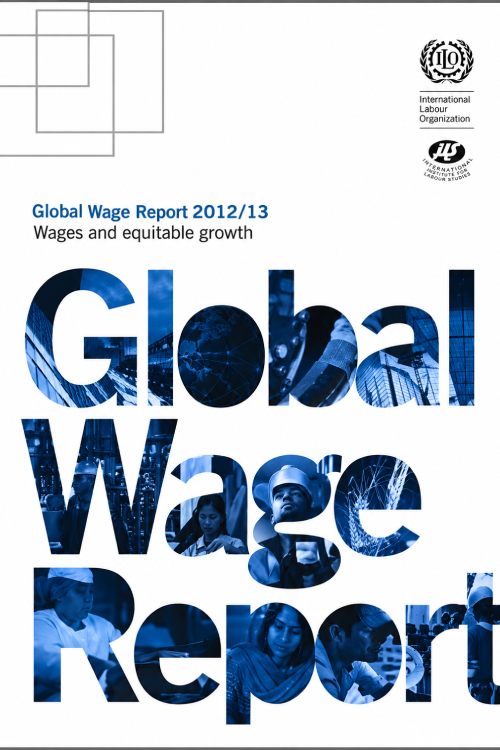
Global Wage Report 2012/13: Wages and Equitable Growth, published by the International Labour Organization (ILO), provides a comprehensive analysis of global wage trends, income distribution, labour productivity, and the relationship between wages and equitable economic growth.
The report examines how wages have evolved across different regions of the world, particularly in the aftermath of the global financial crisis. It highlights significant differences in wage growth between advanced economies and emerging and developing countries, exploring the economic and social factors influencing these trends.
A major focus of the report is the widening gap between wage growth and labour productivity. While productivity has increased in many economies, wages have not always grown at the same pace, resulting in a declining share of national income going to workers.
The report also investigates growing wage inequality, including the widening differences between high-income and low-income earners, and examines the implications of these developments for household consumption, investment, aggregate demand, and economic recovery.
Through international comparisons and economic analysis, Global Wage Report 2012/13 explores how globalisation, technological developments, and changes in labour market institutions have influenced wages and income distribution.
The report emphasizes the importance of coordinated economic and labour market policies to address income imbalances, strengthen sustainable economic recovery, and promote more equitable growth within and across countries.
Key Features
-
Provides a comprehensive overview of global and regional wage trends.
-
Examines the impact of the global financial crisis on wages and employment.
-
Analyses differences in wage growth between advanced, emerging, and developing economies.
-
Explores the widening gap between labour productivity growth and wage growth.
-
Discusses declining labour income shares and increasing income inequality.
-
Examines differences between high-income and low-income earners.
-
Investigates the relationship between wages, household consumption, investment, and aggregate demand.
-
Highlights the effects of globalisation, technological change, and labour market institutions on wage distribution.
-
Explores the importance of coordinated economic policies for achieving equitable and sustainable growth.
-
Presents international wage statistics, economic analysis, and policy recommendations.
Global Wage Report 2012/13 serves as a valuable reference for economists, researchers, policymakers, academics, labour market specialists, students, and readers interested in wage inequality, labour economics, income distribution, and international economic development.
About the Author
The International Labour Organization (ILO) is a specialised agency of the United Nations dedicated to promoting social justice, decent work, internationally recognised labour rights, and improved working conditions worldwide.
The organization conducts research and provides policy guidance on wages, employment, labour markets, economic inequality, social protection, and international labour standards.
Its Global Wage Report series examines wage developments across countries and regions, providing statistical analysis and policy insights into wage growth, labour productivity, income distribution, and economic development.
Through its research publications, the ILO contributes to international discussions on fair remuneration, inclusive labour markets, and sustainable economic growth.
-
Author: International Labour Organization (ILO)
-
Publisher: Academic Foundation
-
Publication Date: 1 January 2013 (Amazon listing)
-
Language: English
-
Format: Paperback
-
Pages: 126 (Amazon listing)
-
ISBN-10: 8171889964
-
ISBN-13: 9788171889969
-
Country of Origin: India
Academic Foundation (AF), based in New Delhi, is India’s leading independent publisher of academic/scholarly books in Social Sciences, specialising in Economics—Development Economics and Indian Economy in particular, and allied subjects.
Global Wage Report 2012/13: Wages and Equitable Growth, published by the International Labour Organization (ILO), provides a comprehensive analysis of global wage trends, income distribution, labour productivity, and the relationship between wages and equitable economic growth.
The report examines how wages have evolved across different regions of the world, particularly in the aftermath of the global financial crisis. It highlights significant differences in wage growth between advanced economies and emerging and developing countries, exploring the economic and social factors influencing these trends.
A major focus of the report is the widening gap between wage growth and labour productivity. While productivity has increased in many economies, wages have not always grown at the same pace, resulting in a declining share of national income going to workers.
The report also investigates growing wage inequality, including the widening differences between high-income and low-income earners, and examines the implications of these developments for household consumption, investment, aggregate demand, and economic recovery.
Through international comparisons and economic analysis, Global Wage Report 2012/13 explores how globalisation, technological developments, and changes in labour market institutions have influenced wages and income distribution.
The report emphasizes the importance of coordinated economic and labour market policies to address income imbalances, strengthen sustainable economic recovery, and promote more equitable growth within and across countries.
Key Features
-
Provides a comprehensive overview of global and regional wage trends.
-
Examines the impact of the global financial crisis on wages and employment.
-
Analyses differences in wage growth between advanced, emerging, and developing economies.
-
Explores the widening gap between labour productivity growth and wage growth.
-
Discusses declining labour income shares and increasing income inequality.
-
Examines differences between high-income and low-income earners.
-
Investigates the relationship between wages, household consumption, investment, and aggregate demand.
-
Highlights the effects of globalisation, technological change, and labour market institutions on wage distribution.
-
Explores the importance of coordinated economic policies for achieving equitable and sustainable growth.
-
Presents international wage statistics, economic analysis, and policy recommendations.
Global Wage Report 2012/13 serves as a valuable reference for economists, researchers, policymakers, academics, labour market specialists, students, and readers interested in wage inequality, labour economics, income distribution, and international economic development.
About the Author
The International Labour Organization (ILO) is a specialised agency of the United Nations dedicated to promoting social justice, decent work, internationally recognised labour rights, and improved working conditions worldwide.
The organization conducts research and provides policy guidance on wages, employment, labour markets, economic inequality, social protection, and international labour standards.
Its Global Wage Report series examines wage developments across countries and regions, providing statistical analysis and policy insights into wage growth, labour productivity, income distribution, and economic development.
Through its research publications, the ILO contributes to international discussions on fair remuneration, inclusive labour markets, and sustainable economic growth.
-
Author: International Labour Organization (ILO)
-
Publisher: Academic Foundation
-
Publication Date: 1 January 2013 (Amazon listing)
-
Language: English
-
Format: Paperback
-
Pages: 126 (Amazon listing)
-
ISBN-10: 8171889964
-
ISBN-13: 9788171889969
-
Country of Origin: India

Couldn't load pickup availability
Share
-

Curated Collections By AF Press
-

Premium Print Quality
-

Author-Centric Publishing
-

Trusted by Readers Nationwide


Global Wage Report 2012/13