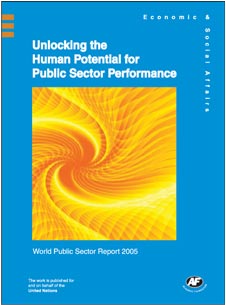
Unlocking the Human Potential for Public Sector Performance
World Public Sector Report 2005
United Nations
World Public Sector Report 2005
About the Book
The conditions of globalization, including economic integration, fiscal discipline, introduction of information communications technologies and democratic governance, have increasingly forced states to redefine their role in public management and to reform the public administration system. However, there is growing realization amongst decision makers that policy and institutional reform per se will not be sufficient to revitalize the public sector. Major strengthening of the knowledge, skills, values, attitudes and leadership abilities of human capital is also needed to transform the public sector, particularly in developing countries and countries with economies in transition. This year's Report is expected to contribute to global and national debates on this important topic.
About the Author(s) / Editor(s)
UNITED NATIONS
Contents in Detail
Preface
Acknowledgements
Executive summary
Explanatory notes
Towards an Impartial, Professional and Responsive Public Service
Introduction
I.The globalization of public sector reform
The changing role of public administration
Traditional public administration
Public management
Responsive governance
Emerging issues
The resilience of traditional civil service values
Public administration: responsive to whom?
Responsiveness to politicians
Responsiveness to citizens and customers
Towards a new synthesis
II.Human resource management and government performance
Why HRM matters
The importance of merit-oriented HRM policies
Government as a “model employer”
HRM reform: “starting from where you find yourself”
Reform requires sound political diagnosis
Leadership commitment is necessary
III.Socio-economic challenges facing HRM
Demographic changes
Shortage of skilled labour
Labour migration
Potential benefits of labour migration
HIV/AIDS
Managing in an HIV/AIDS environment
IV.The mixed results of HRM reform
Structural adjustment and downsizing
New public management: lessons learned
Outsourcing: a double-edged sword
Performance-related pay: an unwarranted
panacea?
NPM: more than a doctrine
Leap-frogging: a possibility?
Labour relations in the public service
Diversity management
Gender imbalance
Accommodating diversity
V.Managing people as a strategic resource
Adopting a holistic approach to reform
Building an effective HRM institutional
framework
Legal and regulatory reform
Central government: assigning the HRM
leadership role
Central and line agencies: establishing the
division of HRM responsibility
Professionalizing human resource
management
HRM units: towards strategic specialization
Competence frameworks: setting the
standard for performance
Merit-based appointment: getting the
best person for the job
Developing a pay policy: attracting and
retaining talent
Performance management and appraisal:
supporting and developing staff
Rightsizing: getting staffing back on track
VI.Promoting organizational learning in
the public service
Organizational culture: changing
mindsets
Compliance: a virtue turned vice
Organizational learning: a people-
centred framework
Strategic areas to promote organizational
learning
Improve knowledge-sharing and management
Promote mentoring programmes for staff
Enhance the analytical capacity of
government
Strengthen the career development system
Leadership as the facilitator of learning
Technical summary: Public sector performance,
prestige and promotion
Public sector performance
Prestige of a public sector career
Promotion to high-level political posts
Bibliography
Boxes
1.Information and communication
technologies
2.UN/DESA analysis of government
performance
3.Political discretion in reform—Benin
4.Old age, new challenges—China
5.Pension reform for a sustainable
future—Brazil
6.Turning brain drain into brain
gain—Philippines
7.Stemming the brain drain—South Africa
8.The impact of HIV/AIDS on the
public service—Malawi
9.Outsourcing public services: the National
Health Service—United Kingdom
10.Performance-related pay: if you fail to
prepare, you prepare to fail—Mauritius
11.The Public Service Modernization Act
—Canada
12.The role of ICTs in facilitating
decentralized HRM—Cameroon
13.A voluntary retirement scheme—India
14.Rightsizing the right way—Uruguay
15.Developing a shared vision—Germany
16.Leading by example—Namibia
Figures
1.Driving and restraining forces in Moroccan reform
2.Ten developing countries with highest emigration
rates of highly educated people to OECD
countries, 1999–2001
3.Ten largest developing-country recipients
of remittances, 2002
4.Ten developing countries with largest ratios
of remittances to GDP, 2002
5.Ten developing countries with highest proportion
of adults living with HIV, 2003
6.Ten developing countries with the most
adults living with HIV, 2003
7.Central government expenditure on wages
in 49 developing countries, 1980–1999
8.Decision-makers one level below that of minister
in the central administration of 30 European
countries, by gender, 2004
9.Decision-makers two levels below that of minister
in the central administration of 30 European
countries, by gender, 2004
Scatter plots
1.Bureaucratic quality and merit
2.Integrity and merit
3.Bureaucratic quality and salary
4.Integrity and salary
5.Prestige and new public management
Tables
1.Three models of public administration
2.Six forms of accountability
3.Approaches for different stages
of HRM reform
4.Composition of Chad’s civil service, 2002
5.Selected HRM features of the three
models of public administration
6.Responsibility for HRM in central
government agencies
7.A competence framework for HRM
8.Selected pay-scale compression
ratios, 1991–2003
9.Wages and salaries in federal
versus unitary states
| Publisher | AF Press |
| Publication Date | 2006 |
| Number of Pages | 141 |
| ISBN |
8171885225 |
Academic Foundation (AF), based in New Delhi, is India’s leading independent publisher of academic/scholarly books in Social Sciences, specialising in Economics—Development Economics and Indian Economy in particular, and allied subjects.
About the Book
The conditions of globalization, including economic integration, fiscal discipline, introduction of information communications technologies and democratic governance, have increasingly forced states to redefine their role in public management and to reform the public administration system. However, there is growing realization amongst decision makers that policy and institutional reform per se will not be sufficient to revitalize the public sector. Major strengthening of the knowledge, skills, values, attitudes and leadership abilities of human capital is also needed to transform the public sector, particularly in developing countries and countries with economies in transition. This year's Report is expected to contribute to global and national debates on this important topic.
About the Author(s) / Editor(s)
UNITED NATIONS
Contents in Detail
Preface
Acknowledgements
Executive summary
Explanatory notes
Towards an Impartial, Professional and Responsive Public Service
Introduction
I.The globalization of public sector reform
The changing role of public administration
Traditional public administration
Public management
Responsive governance
Emerging issues
The resilience of traditional civil service values
Public administration: responsive to whom?
Responsiveness to politicians
Responsiveness to citizens and customers
Towards a new synthesis
II.Human resource management and government performance
Why HRM matters
The importance of merit-oriented HRM policies
Government as a “model employer”
HRM reform: “starting from where you find yourself”
Reform requires sound political diagnosis
Leadership commitment is necessary
III.Socio-economic challenges facing HRM
Demographic changes
Shortage of skilled labour
Labour migration
Potential benefits of labour migration
HIV/AIDS
Managing in an HIV/AIDS environment
IV.The mixed results of HRM reform
Structural adjustment and downsizing
New public management: lessons learned
Outsourcing: a double-edged sword
Performance-related pay: an unwarranted
panacea?
NPM: more than a doctrine
Leap-frogging: a possibility?
Labour relations in the public service
Diversity management
Gender imbalance
Accommodating diversity
V.Managing people as a strategic resource
Adopting a holistic approach to reform
Building an effective HRM institutional
framework
Legal and regulatory reform
Central government: assigning the HRM
leadership role
Central and line agencies: establishing the
division of HRM responsibility
Professionalizing human resource
management
HRM units: towards strategic specialization
Competence frameworks: setting the
standard for performance
Merit-based appointment: getting the
best person for the job
Developing a pay policy: attracting and
retaining talent
Performance management and appraisal:
supporting and developing staff
Rightsizing: getting staffing back on track
VI.Promoting organizational learning in
the public service
Organizational culture: changing
mindsets
Compliance: a virtue turned vice
Organizational learning: a people-
centred framework
Strategic areas to promote organizational
learning
Improve knowledge-sharing and management
Promote mentoring programmes for staff
Enhance the analytical capacity of
government
Strengthen the career development system
Leadership as the facilitator of learning
Technical summary: Public sector performance,
prestige and promotion
Public sector performance
Prestige of a public sector career
Promotion to high-level political posts
Bibliography
Boxes
1.Information and communication
technologies
2.UN/DESA analysis of government
performance
3.Political discretion in reform—Benin
4.Old age, new challenges—China
5.Pension reform for a sustainable
future—Brazil
6.Turning brain drain into brain
gain—Philippines
7.Stemming the brain drain—South Africa
8.The impact of HIV/AIDS on the
public service—Malawi
9.Outsourcing public services: the National
Health Service—United Kingdom
10.Performance-related pay: if you fail to
prepare, you prepare to fail—Mauritius
11.The Public Service Modernization Act
—Canada
12.The role of ICTs in facilitating
decentralized HRM—Cameroon
13.A voluntary retirement scheme—India
14.Rightsizing the right way—Uruguay
15.Developing a shared vision—Germany
16.Leading by example—Namibia
Figures
1.Driving and restraining forces in Moroccan reform
2.Ten developing countries with highest emigration
rates of highly educated people to OECD
countries, 1999–2001
3.Ten largest developing-country recipients
of remittances, 2002
4.Ten developing countries with largest ratios
of remittances to GDP, 2002
5.Ten developing countries with highest proportion
of adults living with HIV, 2003
6.Ten developing countries with the most
adults living with HIV, 2003
7.Central government expenditure on wages
in 49 developing countries, 1980–1999
8.Decision-makers one level below that of minister
in the central administration of 30 European
countries, by gender, 2004
9.Decision-makers two levels below that of minister
in the central administration of 30 European
countries, by gender, 2004
Scatter plots
1.Bureaucratic quality and merit
2.Integrity and merit
3.Bureaucratic quality and salary
4.Integrity and salary
5.Prestige and new public management
Tables
1.Three models of public administration
2.Six forms of accountability
3.Approaches for different stages
of HRM reform
4.Composition of Chad’s civil service, 2002
5.Selected HRM features of the three
models of public administration
6.Responsibility for HRM in central
government agencies
7.A competence framework for HRM
8.Selected pay-scale compression
ratios, 1991–2003
9.Wages and salaries in federal
versus unitary states
| Publisher | AF Press |
| Publication Date | 2006 |
| Number of Pages | 141 |
| ISBN |
8171885225 |
Couldn't load pickup availability
Share
-
Curated Collections By AF Press
-
Premium Print Quality
-
Author-Centric Publishing
-
Trusted by Readers Nationwide
Unlocking the Human Potential for Pub...