

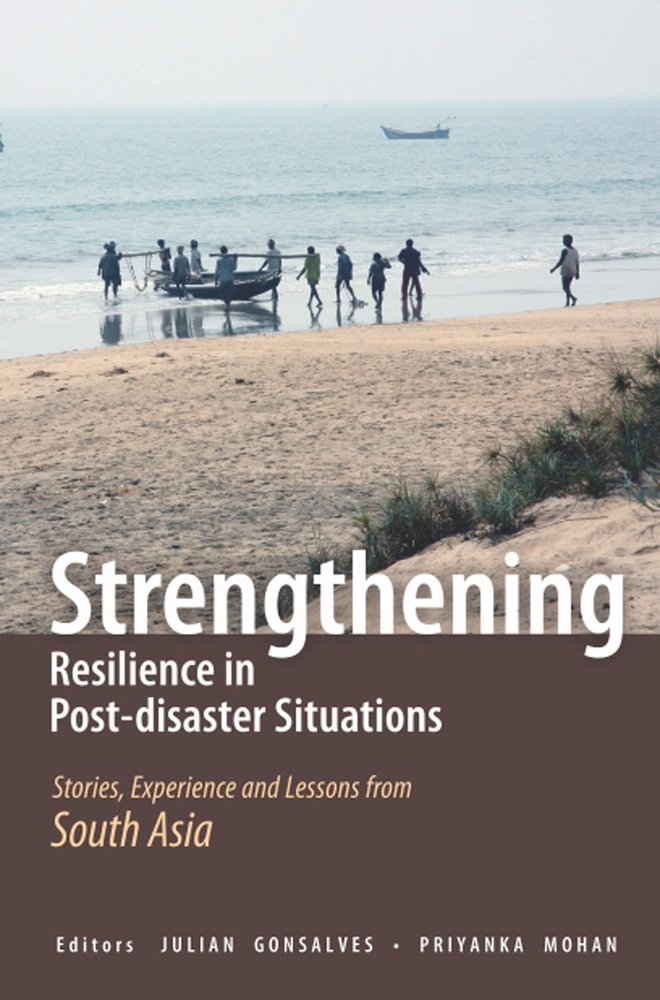
Strengthening Resilience in Post-disaster Situations
Julian Gonsalves (Ed.)‚ Priyanka Mohan (Ed.)
About the Book
To mitigate, develop and improve the lives of those vulnerable to intense natural disasters, climate change and food insecurity, many agencies are funding and implementing diverse activities from reconstruction to rehabilitation. In particular, mid-to long-term interventions, strategies, and practical approaches are being designed and adopted to build the resilience of the poor. This book presents the lessons and impacts from a collection of these projects, describing concepts, strategies, processes, and tools in such a way that they can be easily replicated and shared with a wider audience. It describes valuable practical experiences and lessons from the field, capturing a range of diverse interventions from implementing agencies involved in post-disaster rehabilitation.
Part 1 presents an overview of the coastal threats and post-tsunami issues faced by the coastal communities of South Asia. Part 2 examines the concept of risk reduction and, in doing so, brings together the focal elements of resilience, mitigation and adaptation. Part 3 describes the pathways for building the capacity of vulnerable communities to withstand and rebuild from natural disasters. Part 4 presents real-life stories of how post-disaster rehabilitation and resilience-building projects have led to positive change at the community level.
About the Author(s) / Editor(s)
Julian Gonsalves has 35 years of experience in the design, management and evaluation of international rural and agricultural research and development programmes. From 1984 to 2000, he worked for the International Institute of Rural Reconstruction. Since then, he has focussed his energies on providing short-term assistance as an external reviewer and evaluator to various international development agencies.
Priyanka Mohan is formerly a Research Officer at IDRC’s Regional Office for South Asia and China in New Delhi. Before joining IDRC, she worked for the Centre for Environment Education, on issues related to waste management and environment impact in Southern India.
Contents in Detail
Foreword
Acknowledgement
Introduction
Acronyms
Part 1
Coastal Threats and Challenges
1. Rehabilitating Livelihoods in Tsunami-Affected
Coastal Communities in Asia
2. Ecosystem Threats and Impacts in Coastal Areas
3. Coastal Erosion and its Management
4. Tsunami Impacts and Coastal Land Use Issues
5. Coastal Planning and Regulatory Issues: Post-Tsunami
6. Trends in Land and Resource Use and Land Tenure
7. Management Challenges and Approaches for Sustainable ICM
8. Integrated Coastal Zone Planning
9. Establishing Resilient Coastal Ecosystems for Sustainable Livelihoods
Part 2
Disaster Risk Reduction: Key to Adaptation
10. Reducing Disaster Risk: A Challenge for Development
11. Linking Poverty, Vulnerability, and Disaster Risk
12. The Impact of Climate Change on the Vulnerable
13. Understanding Adaptation and Mitigation
14. Demistifying Terminologies and Definitions:
Same Terms, Different Meanings?
15. A Framework on Addressing Climate Change
Adaptation and Vulnerabilities
16. Framework for Disaster-Resistant Sustainable Livelihoods
17. Adaptation: The Context for Change
18. Looking at Climate Change Adaptation from Various Realms
19. Assessing Resilience and Vulnerability:
Principles, Strategies and Actions
20. Analytical and Assessment Tools and Methods
21. Participatory Community Risk Assessment
22. Integrating Ecosystems Management with DRR
23. Ecosystem-based Disaster Risk Reduction
24. Indicators for Use in Ecosystem-based Disaster Risk Reduction
25. Healthy Ecosystems and their Role in Disaster Risk Reduction
26. Adaptation to Climate Change
27. Capitalising on Similarities: Bridging Differences
between CCA and DRR
28. Disaster Risk Reduction and Climate Change Framework:
The Cordaid Lens
29. Enhancing Coping Mechanisms in Resilience Building
30. Supporting Local Capacities: From Jargon to Impact
Part 3
Building Capacities: The Path to Community Resilience
31. Emergence of Resilience
32. Understanding Resilience in Coastal Areas
33. Towards Creating a Resilient Community
34. Learning to Respond to Disasters: Community Empowerment
35. Community Resilience: A Social Justice Perspective
36. Boosting Community Resilience
37. Community Resilience and Community-based Management
38. Information and Communications Technology
for Disaster Risk Reduction
39. Management of Coastal Resources through Village Level Planning
40. Development Planning using Spatial Data
41. Towards a Better Assessment Framework: The Case of Wanduruppa
42. Building Resilient Communities: Lessons from Cordaid
43. Community Disaster Resilience Fund:
Early Insights and Recommendations
44. Capacity Building Interventions: Drawing Lessons from the Field
45. A Role for Customised Financial Mechanisms
46. Village Information Centres: Harnessing the Potential of Technology
47. Considerations for a Village Resource Centre
48. Transforming the Value Chains through
Business Development Approach
49. Planning Coastal Revegetation Programmes
50. Role of Coastal Bioshield in Strengthening the Coastal Resilience
51. Non-Mangrove Bioshields in Coastal Areas
Part 4
Risk Reduction Experiences from the Field
52. An Introduction to the SRTAC Project
53. Networking and Partnerships in Rural Sri Lanka
54. Village Development Planning Processes in Sri Lanka
55. Local Participation in Mangrove Management
56. Unleashing Women Power in Tamil Nadu
57. Exposure Visits: A Tool for Gender Mainstreaming
58. Community Disaster Resilience Fund: Learning from a Pilot Initiative
59. Building Bonds, Breaking Bondages in the Gulf of Mannar
60. Insurance: Investment towards Security
and Resilience in Palakayatippa
61. Community-Managed Microfinance:
The Case of Danavaipeta, Andhra Pradesh
62. Community Participation: The Case of the Andaragasyaya Canal
63. Revival of Agriculture in Sorlagondi Village, Andhra Pradesh
64. Transfering Ownership to Communities:
Flood Mitigation in Ambalantota
65. The Importance of Providing Solutions that Really Work
66. Collective Management of Resources in Village Development
67. Reviving Traditional Paddy Farming in Andaragasayaya
68. Collective Action for Eco-Shrimp Farming in Sorlagondi
69. Facilitation makes a World of Difference in Danavaipeta
70. Weaving in Technology to the Coir Industry:
The Thalalla Experience
71. Applying Market-Systems Approaches in Wanduruppa
72. Integrated Mangrove and Fishery Farming:
A Model for Saline Transformed Lands
73. Raising Mangrove Nurseries in Muthuregunathapuram Village
74. Viability of Bioshield Development in Sri Lanka
75. Participatory GIS for Village Development
76. Village Resource Centres: The Spokes of the Information Village
77. Village Resource and Knowledge Centre
as Hubs for Disaster Preparedness
78. Livelihood Avenues: Reducing Economic Vulnerabilities
79. Customised Process-Oriented Facilitation of Project Monitoring
Information Resources
| Publisher | AF Press |
| Publication Date | 2011 |
| Number of Pages | 800 |
| ISBN |
9788171889044 |
Academic Foundation (AF), based in New Delhi, is India’s leading independent publisher of academic/scholarly books in Social Sciences, specialising in Economics—Development Economics and Indian Economy in particular, and allied subjects.
About the Book
To mitigate, develop and improve the lives of those vulnerable to intense natural disasters, climate change and food insecurity, many agencies are funding and implementing diverse activities from reconstruction to rehabilitation. In particular, mid-to long-term interventions, strategies, and practical approaches are being designed and adopted to build the resilience of the poor. This book presents the lessons and impacts from a collection of these projects, describing concepts, strategies, processes, and tools in such a way that they can be easily replicated and shared with a wider audience. It describes valuable practical experiences and lessons from the field, capturing a range of diverse interventions from implementing agencies involved in post-disaster rehabilitation.
Part 1 presents an overview of the coastal threats and post-tsunami issues faced by the coastal communities of South Asia. Part 2 examines the concept of risk reduction and, in doing so, brings together the focal elements of resilience, mitigation and adaptation. Part 3 describes the pathways for building the capacity of vulnerable communities to withstand and rebuild from natural disasters. Part 4 presents real-life stories of how post-disaster rehabilitation and resilience-building projects have led to positive change at the community level.
About the Author(s) / Editor(s)
Julian Gonsalves has 35 years of experience in the design, management and evaluation of international rural and agricultural research and development programmes. From 1984 to 2000, he worked for the International Institute of Rural Reconstruction. Since then, he has focussed his energies on providing short-term assistance as an external reviewer and evaluator to various international development agencies.
Priyanka Mohan is formerly a Research Officer at IDRC’s Regional Office for South Asia and China in New Delhi. Before joining IDRC, she worked for the Centre for Environment Education, on issues related to waste management and environment impact in Southern India.
Contents in Detail
Foreword
Acknowledgement
Introduction
Acronyms
Part 1
Coastal Threats and Challenges
1. Rehabilitating Livelihoods in Tsunami-Affected
Coastal Communities in Asia
2. Ecosystem Threats and Impacts in Coastal Areas
3. Coastal Erosion and its Management
4. Tsunami Impacts and Coastal Land Use Issues
5. Coastal Planning and Regulatory Issues: Post-Tsunami
6. Trends in Land and Resource Use and Land Tenure
7. Management Challenges and Approaches for Sustainable ICM
8. Integrated Coastal Zone Planning
9. Establishing Resilient Coastal Ecosystems for Sustainable Livelihoods
Part 2
Disaster Risk Reduction: Key to Adaptation
10. Reducing Disaster Risk: A Challenge for Development
11. Linking Poverty, Vulnerability, and Disaster Risk
12. The Impact of Climate Change on the Vulnerable
13. Understanding Adaptation and Mitigation
14. Demistifying Terminologies and Definitions:
Same Terms, Different Meanings?
15. A Framework on Addressing Climate Change
Adaptation and Vulnerabilities
16. Framework for Disaster-Resistant Sustainable Livelihoods
17. Adaptation: The Context for Change
18. Looking at Climate Change Adaptation from Various Realms
19. Assessing Resilience and Vulnerability:
Principles, Strategies and Actions
20. Analytical and Assessment Tools and Methods
21. Participatory Community Risk Assessment
22. Integrating Ecosystems Management with DRR
23. Ecosystem-based Disaster Risk Reduction
24. Indicators for Use in Ecosystem-based Disaster Risk Reduction
25. Healthy Ecosystems and their Role in Disaster Risk Reduction
26. Adaptation to Climate Change
27. Capitalising on Similarities: Bridging Differences
between CCA and DRR
28. Disaster Risk Reduction and Climate Change Framework:
The Cordaid Lens
29. Enhancing Coping Mechanisms in Resilience Building
30. Supporting Local Capacities: From Jargon to Impact
Part 3
Building Capacities: The Path to Community Resilience
31. Emergence of Resilience
32. Understanding Resilience in Coastal Areas
33. Towards Creating a Resilient Community
34. Learning to Respond to Disasters: Community Empowerment
35. Community Resilience: A Social Justice Perspective
36. Boosting Community Resilience
37. Community Resilience and Community-based Management
38. Information and Communications Technology
for Disaster Risk Reduction
39. Management of Coastal Resources through Village Level Planning
40. Development Planning using Spatial Data
41. Towards a Better Assessment Framework: The Case of Wanduruppa
42. Building Resilient Communities: Lessons from Cordaid
43. Community Disaster Resilience Fund:
Early Insights and Recommendations
44. Capacity Building Interventions: Drawing Lessons from the Field
45. A Role for Customised Financial Mechanisms
46. Village Information Centres: Harnessing the Potential of Technology
47. Considerations for a Village Resource Centre
48. Transforming the Value Chains through
Business Development Approach
49. Planning Coastal Revegetation Programmes
50. Role of Coastal Bioshield in Strengthening the Coastal Resilience
51. Non-Mangrove Bioshields in Coastal Areas
Part 4
Risk Reduction Experiences from the Field
52. An Introduction to the SRTAC Project
53. Networking and Partnerships in Rural Sri Lanka
54. Village Development Planning Processes in Sri Lanka
55. Local Participation in Mangrove Management
56. Unleashing Women Power in Tamil Nadu
57. Exposure Visits: A Tool for Gender Mainstreaming
58. Community Disaster Resilience Fund: Learning from a Pilot Initiative
59. Building Bonds, Breaking Bondages in the Gulf of Mannar
60. Insurance: Investment towards Security
and Resilience in Palakayatippa
61. Community-Managed Microfinance:
The Case of Danavaipeta, Andhra Pradesh
62. Community Participation: The Case of the Andaragasyaya Canal
63. Revival of Agriculture in Sorlagondi Village, Andhra Pradesh
64. Transfering Ownership to Communities:
Flood Mitigation in Ambalantota
65. The Importance of Providing Solutions that Really Work
66. Collective Management of Resources in Village Development
67. Reviving Traditional Paddy Farming in Andaragasayaya
68. Collective Action for Eco-Shrimp Farming in Sorlagondi
69. Facilitation makes a World of Difference in Danavaipeta
70. Weaving in Technology to the Coir Industry:
The Thalalla Experience
71. Applying Market-Systems Approaches in Wanduruppa
72. Integrated Mangrove and Fishery Farming:
A Model for Saline Transformed Lands
73. Raising Mangrove Nurseries in Muthuregunathapuram Village
74. Viability of Bioshield Development in Sri Lanka
75. Participatory GIS for Village Development
76. Village Resource Centres: The Spokes of the Information Village
77. Village Resource and Knowledge Centre
as Hubs for Disaster Preparedness
78. Livelihood Avenues: Reducing Economic Vulnerabilities
79. Customised Process-Oriented Facilitation of Project Monitoring
Information Resources
| Publisher | AF Press |
| Publication Date | 2011 |
| Number of Pages | 800 |
| ISBN |
9788171889044 |

Couldn't load pickup availability
Share
-

Curated Collections By AF Press
-

Premium Print Quality
-

Author-Centric Publishing
-

Trusted by Readers Nationwide


Strengthening Resilience in Post-disa...