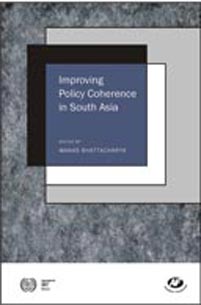
Improving Policy Coherence in South Asia
Manas Bhattacharya (Ed.)
About the Book
Jobless growth is a major concern in today’s world. Over and above, employment becomes the first casualty of financial crises that seem to occur almost in a periodic manner. How well the countries have mainstreamed employment in their macro strategies? How coherent are the macro policies that countries follow from the perspective of centrality of Decent Work in the context of investment and growth?
The volume scans the macro-economic settings of the seven countries of South Asian subregion that include Afghanistan, Bangladesh, India, Iran, Nepal, Pakistan and Sri Lanka and explores how well the macro economic strategies pursued by these countries cohere with the Decent Work objectives.
The papers contributed by various authors in this volume present elaborate research based empirical information and analyses for the readers, researchers, policy makers and multilateral institutions.
The analytical import in this volume also provides a perspective on globalization. Are these countries reaping the benefits of this process? Is globalization helping in achieving the Decent Work goals? The book raises many issues and opens up wide areas of debate.
Contributors
Ahmad Ahsan, Lead Economist, World Bank, Washington DC, USA
Manas Bhattacharya, Senior Technical Specialist, International Labour Organization, Geneva, Switzerland
Dipak Dasgupta, Lead Economist, World Bank, New Delhi, India
Nadeem Ul Haque, Director, Pakistan Institute of Development Economics, Islamabad, Pakistan
K.P. Kannan, Member, National Commission on Enterprises in the Unorganized and Informal Sector, Government of India, New Delhi, India
Paula Kantor, Senior Research Manager, Afghanistan Research and Evaluation Unit, Kabul, Afghanistan
Dilli Raj Khanal, Member, UN Expert Committee on Global Economy and Chairman, Institute of Policy Research and Development, Kathmandu, Nepal
Ashish Narain, Economist, World Bank, New Delhi, India
Shyamali Ranaraja, Consultant, International Labour Organization, Colombo, Sri Lanka
Mohammed Ali Rashid, Professor, North South University, Dhaka, Bangladesh
Hassan Taee, Professor, Allameh Tabatabai University, Tehran and former Deputy Head, Parliament Research Center, Tehran, Islamic Republic of Iran
Contents in Detail
List of tables, figures, boxes and appendices
Preface
Acknowledgements
Contributors
Abbreviations
1. Policy coherence, growth, investment and
decent work in South Asia: Some reflections
— Manas Bhattacharya
1.1 Introduction
1.2 Growth and employment
1.3 Growth inducing policies and their
implications for employment growth
1.4 Growth–Employment nexus: Decent
work implications and coherence
1.5 Highlights of the following chapters
1.6 Conclusions
2. Growth, investment and decent work in Bangladesh:
The need for a better policy mix
— Mohammed Ali Rashid
2.1 Introduction
2.2 Economic growth, investment and decent
employment: The status
2.3 Macroeconomic policy and decent
employment
2.4 Labour productivity and employment
2.5 The quality of employment in the
formal manufacturing sector
2.6 Conclusions
3. India: A case for strengthening policy coherence 133
— K.P. Kannan
3.1 Introduction
3.2 Growth, investment and employment
3.3 Growth and decent work
3.4 The disconnect between growth
and decent work
3.5 Decent work and macroeconomic policy
3.6 Potential trade-offs between employment
and other macroeconomic policy objectives
4. Labour markets outcomes and policy
challenges in India
— Ahmad Ahsan,Dipak Dasgupta and Ashish Narain
4.1 Introduction
4.2 Pattern of economic growth and
labour market
4.3 Productivity, wage growth and
job quality
4.4 Is there a trade-off between
productivity and employment
growth?
4.5 How can government policies help?
4.6 Labour regulation and reforms
4.7 Conclusions: India’s employment challenges
5. Nepal: A critical assessment of experience
— Dilli Raj Khanal
5.1 Introduction
5.2 Growth performance and employment
patterns
5.3 Macroeconomic policies and decent
employment in Nepal
5.4 Major conclusions and policy implications
6. Pakistan: A tale of controlled market and
weak governance
— Nadeem Ul Haque
6.1 Introduction
6.2 Pakistan’s labour market
6.3 Planning has not worked while
quality of governance has declined
6.4 A review of Pakistan’s growth
6.5 Paradigm shift: The new
development thinking
6.6 What is to be done?
6.7 Sequencing of reform and
political economy
6.8 Conclusions
7. Sri Lanka: The role of strengthening
policy coherence
— Shyamali Ranaraja
7.1 Background
7.2 Growth, investment and employment
in Sri Lanka
7.3 The disconnect between economic growth
and decent work at the national level
7.4 Linking macroeconomic policy and decent
work
7.5 Is decent work central to current
economic policy?
7.6 Conclusions
8. Afghanistan: Little space for decent work
— Paula Kantor
8.1 Introduction
8.2 Setting the scene
8.3 Decent work deficits in Afghanistan
8.4 Growth, investment and decent work
in policy and programmes
8.5 Aid community role in promoting growth,
investment and decent work
8.6 Conclusions and recommendations
9. Iran: Decent work challenges
— Hassan Taee
9.1 Introduction
9.2 The trend of economic growth and formation of gross fixed capital
9.3 Population and the labour market
9.4 Labour market and employment policies
9.5 Decent work requirements
9.6 Concluding remarks
References and selected reading
Index
| Publisher | AF Press |
| Publication Date | 2010 |
| Number of Pages | 426 |
| ISBN |
9788171888207 |
Academic Foundation (AF), based in New Delhi, is India’s leading independent publisher of academic/scholarly books in Social Sciences, specialising in Economics—Development Economics and Indian Economy in particular, and allied subjects.
About the Book
Jobless growth is a major concern in today’s world. Over and above, employment becomes the first casualty of financial crises that seem to occur almost in a periodic manner. How well the countries have mainstreamed employment in their macro strategies? How coherent are the macro policies that countries follow from the perspective of centrality of Decent Work in the context of investment and growth?
The volume scans the macro-economic settings of the seven countries of South Asian subregion that include Afghanistan, Bangladesh, India, Iran, Nepal, Pakistan and Sri Lanka and explores how well the macro economic strategies pursued by these countries cohere with the Decent Work objectives.
The papers contributed by various authors in this volume present elaborate research based empirical information and analyses for the readers, researchers, policy makers and multilateral institutions.
The analytical import in this volume also provides a perspective on globalization. Are these countries reaping the benefits of this process? Is globalization helping in achieving the Decent Work goals? The book raises many issues and opens up wide areas of debate.
Contributors
Ahmad Ahsan, Lead Economist, World Bank, Washington DC, USA
Manas Bhattacharya, Senior Technical Specialist, International Labour Organization, Geneva, Switzerland
Dipak Dasgupta, Lead Economist, World Bank, New Delhi, India
Nadeem Ul Haque, Director, Pakistan Institute of Development Economics, Islamabad, Pakistan
K.P. Kannan, Member, National Commission on Enterprises in the Unorganized and Informal Sector, Government of India, New Delhi, India
Paula Kantor, Senior Research Manager, Afghanistan Research and Evaluation Unit, Kabul, Afghanistan
Dilli Raj Khanal, Member, UN Expert Committee on Global Economy and Chairman, Institute of Policy Research and Development, Kathmandu, Nepal
Ashish Narain, Economist, World Bank, New Delhi, India
Shyamali Ranaraja, Consultant, International Labour Organization, Colombo, Sri Lanka
Mohammed Ali Rashid, Professor, North South University, Dhaka, Bangladesh
Hassan Taee, Professor, Allameh Tabatabai University, Tehran and former Deputy Head, Parliament Research Center, Tehran, Islamic Republic of Iran
Contents in Detail
List of tables, figures, boxes and appendices
Preface
Acknowledgements
Contributors
Abbreviations
1. Policy coherence, growth, investment and
decent work in South Asia: Some reflections
— Manas Bhattacharya
1.1 Introduction
1.2 Growth and employment
1.3 Growth inducing policies and their
implications for employment growth
1.4 Growth–Employment nexus: Decent
work implications and coherence
1.5 Highlights of the following chapters
1.6 Conclusions
2. Growth, investment and decent work in Bangladesh:
The need for a better policy mix
— Mohammed Ali Rashid
2.1 Introduction
2.2 Economic growth, investment and decent
employment: The status
2.3 Macroeconomic policy and decent
employment
2.4 Labour productivity and employment
2.5 The quality of employment in the
formal manufacturing sector
2.6 Conclusions
3. India: A case for strengthening policy coherence 133
— K.P. Kannan
3.1 Introduction
3.2 Growth, investment and employment
3.3 Growth and decent work
3.4 The disconnect between growth
and decent work
3.5 Decent work and macroeconomic policy
3.6 Potential trade-offs between employment
and other macroeconomic policy objectives
4. Labour markets outcomes and policy
challenges in India
— Ahmad Ahsan,Dipak Dasgupta and Ashish Narain
4.1 Introduction
4.2 Pattern of economic growth and
labour market
4.3 Productivity, wage growth and
job quality
4.4 Is there a trade-off between
productivity and employment
growth?
4.5 How can government policies help?
4.6 Labour regulation and reforms
4.7 Conclusions: India’s employment challenges
5. Nepal: A critical assessment of experience
— Dilli Raj Khanal
5.1 Introduction
5.2 Growth performance and employment
patterns
5.3 Macroeconomic policies and decent
employment in Nepal
5.4 Major conclusions and policy implications
6. Pakistan: A tale of controlled market and
weak governance
— Nadeem Ul Haque
6.1 Introduction
6.2 Pakistan’s labour market
6.3 Planning has not worked while
quality of governance has declined
6.4 A review of Pakistan’s growth
6.5 Paradigm shift: The new
development thinking
6.6 What is to be done?
6.7 Sequencing of reform and
political economy
6.8 Conclusions
7. Sri Lanka: The role of strengthening
policy coherence
— Shyamali Ranaraja
7.1 Background
7.2 Growth, investment and employment
in Sri Lanka
7.3 The disconnect between economic growth
and decent work at the national level
7.4 Linking macroeconomic policy and decent
work
7.5 Is decent work central to current
economic policy?
7.6 Conclusions
8. Afghanistan: Little space for decent work
— Paula Kantor
8.1 Introduction
8.2 Setting the scene
8.3 Decent work deficits in Afghanistan
8.4 Growth, investment and decent work
in policy and programmes
8.5 Aid community role in promoting growth,
investment and decent work
8.6 Conclusions and recommendations
9. Iran: Decent work challenges
— Hassan Taee
9.1 Introduction
9.2 The trend of economic growth and formation of gross fixed capital
9.3 Population and the labour market
9.4 Labour market and employment policies
9.5 Decent work requirements
9.6 Concluding remarks
References and selected reading
Index
| Publisher | AF Press |
| Publication Date | 2010 |
| Number of Pages | 426 |
| ISBN |
9788171888207 |
Couldn't load pickup availability
Share
-
Curated Collections By AF Press
-
Premium Print Quality
-
Author-Centric Publishing
-
Trusted by Readers Nationwide
Improving Policy Coherence in South Asia