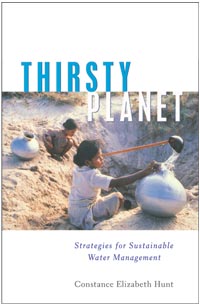
Thirsty Planet
Strategies for Sustainable Water Management
Constance Elizabeth Hunt
Strategies for Sustainable Water Management
About the Book
By 2025 nearly 2 billion people will live in regions experiencing absolute water scarcity.
In the face of this emerging crisis, how should the planet's water be used and managed? Current international policy sees nature competing with human uses of water. Hunt takes issue with this perspective. She suggests that nature is the source of water and only by making the conservation of nature an absolute priority will we have the water we need in future for human use. It is essential, therefore, to manage water in ways that maintain the water cycle and the ecosystems that support it.
THIRSTY PLANET
looks at the complexity of the problem. It provides a wide array of ideas, information, case studies and ecological knowledge - often from remote corners of the developing world - that could provide an alternative vision for water use and management at this critical time.
Essential and compelling reading for students on courses related to water resource management and development, for water managers and decision makers, and for non-specialists with an interest in global water issues.
'Constance Hunt does a valuable service by providing a concise and readable primer on the task of preserving the freshwater ecosystems on which we all depend. Thirsty Planet is required reading for anyone interested in learning what tools we have available to meet one of the greatest challenges to humanity and nature in the 21st century.'
KATHRYN S FULLER (President, World Wildlife Fund)
'This is a tremendous book for anyone taking a serious look at global water problems. Constance Hunt exposes the powerful forces that have damaged rivers and watersheds and impaired the ability of natural ecosystems to supply clean water. She shows that the big water companies are using their power for a dramatic takeover of public water resources for private profit without thought of sustainability for the long term.'
BRENT BLACKWELDER (President, Friends of the Earth)
This book is a valuable addition to works on global water issues and the painstaking research involved is obvious.
— Down To Earth
About the Author(s) / Editor(s)
Constance Elizabeth Hunt is a biologist and environmentalist with considerable experience in international policy and global campaigns for water management and conservation. She is the recipient of awards from the National Research Council, US Department of Agriculture and US Army Corps of Engineers for outstanding work in the field of water resources management.
She has held a variety of posts. As Senior Adviser to the WWF’s International Living Waters Campaign (1999–2001), she was responsible for basin-scale conservation for the Niger and Mekong rivers and for working with the WWF network on international water policy issues. Before this (1993–1999) she was Senior Programme Officer and Director of Freshwater Ecosystem Conservation for the WWF, managing policy and field projects for sustainable river and wetland management in the US and internationally. She has also served with the World Water Council. She is currently a Senior Adviser with the United Nations Environment Programme (UNEP)’s Dams and Development Project, where she facilitates global dialogues on the recommendations of the World Commission on Dams.
She is the author/editor of two books on conservation, and of numerous articles on sustainable water resources development.
Contents in Detail
List of Figures and Tables
Glossary
Introduction
1.
Riding the Water Cycle: Water Cycle Dynamics
and Freshwater Ecosystems
Water Cycle Mechanics
Non-living Components of the Water Cycle
The Living Components of the Water Cycle
Completing the Cycle
The Value of the Water Cycle and
Freshwater Ecosystems
Internal Ecosystem Dynamics
Services Rendered
Freshwater Ecosystem Values
Conclusion
2.Spiralling Towards a Crisis: Water Use
and Growing Shortages
Water’s Role in Human Civilization
Water Use in Ancient Times
Water Availability and Use in Modern
Times
A Global Water Crisis?
Supply Side Solutions: Stretching the
Water Cycle
Conclusion
3.To Feed the World: Food Supply and
the Water Cycle
Status and Trends in Global Food Production
Status of the Rate of Growth in Food Production
How Much Water Will We Need for Food?
Green Revolution Technologies and Their
Repercussions
Irrigation
Artificial Fertilizers
Pesticides
Declines in Wild Fisheries
How to Keep Food Growing and Water Flowing
Sustainable Agriculture, or Agroecology
Wild Fisheries
Conclusion
4.A Thirsty Planet: Water Supply and Sanitation in
a Water-short World
Water Paucity and Plenty: The Great Divide
Sources of Scarcity
Inefficient Water Use
Hydrological Alterations
Desertification
Pollutants
Pathogens
Improving Our Performance
Water Conservation
Pollution Prevention
Environmental Monitoring and the Use
of Bio-indicators
Restoring Landscape Functions
Using Locally Appropriate Technologies
Wastewater Recycling and Re-use
Conclusion
5.When It Rains, It Pours: Water Management
The Nature and History of Floods
Increasing Flood Hazards
Increasing Vulnerability
The Flood Control Concept
Levees and Polders
Channelization
Dams
Shifts Towards a Holistic Approach to Flood Management
Adaptation
Non-structural Flood Damage Reduction
Flood Damage Reduction through Ecosystem Restoration
Adaptive Management
Conclusion
6.Arteries of Commerce: Inland Waterways
and the Water Cycle
Building the Water Highways
The Birth of Inland Navigation
Current Status of Inland Navigation
Systems
Effects of Inland Waterway Construction and
Operation on the Water Cycle
Inland Waterway Construction
Inland Waterway Operation and Maintenance
Navigating Gently
Making Better Use of Information
Improving Intermodal Interfaces
Improving Barge Design for Environmental Compatibility
Watershed and Channel Management to Reduce Siltation
Maintaining Natural Flow Regimes in Navigable Rivers
Maintaining ‘Environmental Windows’
Making Beneficial Use of Dredged Material
Conclusion
7.A Warmer World: The Interrelationships Between
Global Warming and the Water Cycle
The Nature of the Greenhouse Effect
Effects of Global Warming on the Water Cycle, Aquatic
Ecosystems and People
Climatic Changes
Changes in Aquatic Ecosystems
Likely Effects of Global Warming on Human Water Uses
Pseudo-solutions
Hydropower: No Net Loss of Greenhouse Gases
Nuclear Energy: No Net Gain of Environmental Protection
Carbon Sequestration: Breaking Even and Paying for it
New Generation
Increasing Energy Efficiency
Investing in Renewable Resources
Conclusion
8.When the Water Cycle Breaks Down:
The Potential for Restoration
Freshwater Ecosystems on the Brink
Protection
Maintaining Ecological Processes
Restoration
Restoring Processes
Contemporary Principles of Aquatic
Ecosystem Restoration
Restoration of Specific Aquatic Ecosystem Types
Understanding the Limits
Conclusion
9.Avenues of Governance: Institutional Options
for Protecting the Water Cycle
Binding Agreements: Treaties
The Ramsar Convention
The United Nations Convention
on the Law of the Non-navigational
Uses of International Watercourses
Non-binding Agreements
The World Commission on Dams
The World Water Vision
Free Trade and Market Forces
GATT, GATS and the WTO
The World Bank and International Monetary Fund
Markets and Pricing
Conclusion
Index
| Publisher | AF Press |
| Publication Date | 2007 |
| Number of Pages | 318 |
| ISBN |
8171885497 |
Academic Foundation (AF), based in New Delhi, is India’s leading independent publisher of academic/scholarly books in Social Sciences, specialising in Economics—Development Economics and Indian Economy in particular, and allied subjects.
About the Book
By 2025 nearly 2 billion people will live in regions experiencing absolute water scarcity.
In the face of this emerging crisis, how should the planet's water be used and managed? Current international policy sees nature competing with human uses of water. Hunt takes issue with this perspective. She suggests that nature is the source of water and only by making the conservation of nature an absolute priority will we have the water we need in future for human use. It is essential, therefore, to manage water in ways that maintain the water cycle and the ecosystems that support it.
THIRSTY PLANET
looks at the complexity of the problem. It provides a wide array of ideas, information, case studies and ecological knowledge - often from remote corners of the developing world - that could provide an alternative vision for water use and management at this critical time.
Essential and compelling reading for students on courses related to water resource management and development, for water managers and decision makers, and for non-specialists with an interest in global water issues.
'Constance Hunt does a valuable service by providing a concise and readable primer on the task of preserving the freshwater ecosystems on which we all depend. Thirsty Planet is required reading for anyone interested in learning what tools we have available to meet one of the greatest challenges to humanity and nature in the 21st century.'
KATHRYN S FULLER (President, World Wildlife Fund)
'This is a tremendous book for anyone taking a serious look at global water problems. Constance Hunt exposes the powerful forces that have damaged rivers and watersheds and impaired the ability of natural ecosystems to supply clean water. She shows that the big water companies are using their power for a dramatic takeover of public water resources for private profit without thought of sustainability for the long term.'
BRENT BLACKWELDER (President, Friends of the Earth)
This book is a valuable addition to works on global water issues and the painstaking research involved is obvious.
— Down To Earth
About the Author(s) / Editor(s)
Constance Elizabeth Hunt is a biologist and environmentalist with considerable experience in international policy and global campaigns for water management and conservation. She is the recipient of awards from the National Research Council, US Department of Agriculture and US Army Corps of Engineers for outstanding work in the field of water resources management.
She has held a variety of posts. As Senior Adviser to the WWF’s International Living Waters Campaign (1999–2001), she was responsible for basin-scale conservation for the Niger and Mekong rivers and for working with the WWF network on international water policy issues. Before this (1993–1999) she was Senior Programme Officer and Director of Freshwater Ecosystem Conservation for the WWF, managing policy and field projects for sustainable river and wetland management in the US and internationally. She has also served with the World Water Council. She is currently a Senior Adviser with the United Nations Environment Programme (UNEP)’s Dams and Development Project, where she facilitates global dialogues on the recommendations of the World Commission on Dams.
She is the author/editor of two books on conservation, and of numerous articles on sustainable water resources development.
Contents in Detail
List of Figures and Tables
Glossary
Introduction
1.
Riding the Water Cycle: Water Cycle Dynamics
and Freshwater Ecosystems
Water Cycle Mechanics
Non-living Components of the Water Cycle
The Living Components of the Water Cycle
Completing the Cycle
The Value of the Water Cycle and
Freshwater Ecosystems
Internal Ecosystem Dynamics
Services Rendered
Freshwater Ecosystem Values
Conclusion
2.Spiralling Towards a Crisis: Water Use
and Growing Shortages
Water’s Role in Human Civilization
Water Use in Ancient Times
Water Availability and Use in Modern
Times
A Global Water Crisis?
Supply Side Solutions: Stretching the
Water Cycle
Conclusion
3.To Feed the World: Food Supply and
the Water Cycle
Status and Trends in Global Food Production
Status of the Rate of Growth in Food Production
How Much Water Will We Need for Food?
Green Revolution Technologies and Their
Repercussions
Irrigation
Artificial Fertilizers
Pesticides
Declines in Wild Fisheries
How to Keep Food Growing and Water Flowing
Sustainable Agriculture, or Agroecology
Wild Fisheries
Conclusion
4.A Thirsty Planet: Water Supply and Sanitation in
a Water-short World
Water Paucity and Plenty: The Great Divide
Sources of Scarcity
Inefficient Water Use
Hydrological Alterations
Desertification
Pollutants
Pathogens
Improving Our Performance
Water Conservation
Pollution Prevention
Environmental Monitoring and the Use
of Bio-indicators
Restoring Landscape Functions
Using Locally Appropriate Technologies
Wastewater Recycling and Re-use
Conclusion
5.When It Rains, It Pours: Water Management
The Nature and History of Floods
Increasing Flood Hazards
Increasing Vulnerability
The Flood Control Concept
Levees and Polders
Channelization
Dams
Shifts Towards a Holistic Approach to Flood Management
Adaptation
Non-structural Flood Damage Reduction
Flood Damage Reduction through Ecosystem Restoration
Adaptive Management
Conclusion
6.Arteries of Commerce: Inland Waterways
and the Water Cycle
Building the Water Highways
The Birth of Inland Navigation
Current Status of Inland Navigation
Systems
Effects of Inland Waterway Construction and
Operation on the Water Cycle
Inland Waterway Construction
Inland Waterway Operation and Maintenance
Navigating Gently
Making Better Use of Information
Improving Intermodal Interfaces
Improving Barge Design for Environmental Compatibility
Watershed and Channel Management to Reduce Siltation
Maintaining Natural Flow Regimes in Navigable Rivers
Maintaining ‘Environmental Windows’
Making Beneficial Use of Dredged Material
Conclusion
7.A Warmer World: The Interrelationships Between
Global Warming and the Water Cycle
The Nature of the Greenhouse Effect
Effects of Global Warming on the Water Cycle, Aquatic
Ecosystems and People
Climatic Changes
Changes in Aquatic Ecosystems
Likely Effects of Global Warming on Human Water Uses
Pseudo-solutions
Hydropower: No Net Loss of Greenhouse Gases
Nuclear Energy: No Net Gain of Environmental Protection
Carbon Sequestration: Breaking Even and Paying for it
New Generation
Increasing Energy Efficiency
Investing in Renewable Resources
Conclusion
8.When the Water Cycle Breaks Down:
The Potential for Restoration
Freshwater Ecosystems on the Brink
Protection
Maintaining Ecological Processes
Restoration
Restoring Processes
Contemporary Principles of Aquatic
Ecosystem Restoration
Restoration of Specific Aquatic Ecosystem Types
Understanding the Limits
Conclusion
9.Avenues of Governance: Institutional Options
for Protecting the Water Cycle
Binding Agreements: Treaties
The Ramsar Convention
The United Nations Convention
on the Law of the Non-navigational
Uses of International Watercourses
Non-binding Agreements
The World Commission on Dams
The World Water Vision
Free Trade and Market Forces
GATT, GATS and the WTO
The World Bank and International Monetary Fund
Markets and Pricing
Conclusion
Index
| Publisher | AF Press |
| Publication Date | 2007 |
| Number of Pages | 318 |
| ISBN |
8171885497 |
Couldn't load pickup availability
Share
-
Curated Collections By AF Press
-
Premium Print Quality
-
Author-Centric Publishing
-
Trusted by Readers Nationwide
Thirsty Planet